
What the report says:
This Center for American Progress report highlights the widespread shortage of licensed child care across the United States and the impact these shortages have on families and children’s development.
Key findings:
- Nearly half of America’s children under 6 (46%) live in a child care desert, meaning they are living in areas where there are either no licensed child care supply or at least three children for every licensed slot.
- Deserts are particularly pronounced for low- and middle-income families, Latine communities, and families living in rural areas.
- Child care supply varies widely by state and congressional district, from approximately 5% of young children living in a child care desert in Washington, D.C. to 96% of children in Alaska.
- Head Start deserts are nearly universal, and Head Start programs are especially scarce in rural communities.
- These shortages have major implications for labor force participation, household income, maternal well-being, and child development during a critical developmental window.
Allie’s take:
This report makes clear that child care deserts are not just an inconvenience for families, they are a serious barrier to healthy child development and family well-being. When families cannot find stable, high-quality child care, children miss out on an opportunity for positive early learning experiences and the consistent relationships and routines that help them feel safe, build self-regulation, and learn how to navigate the world around them.
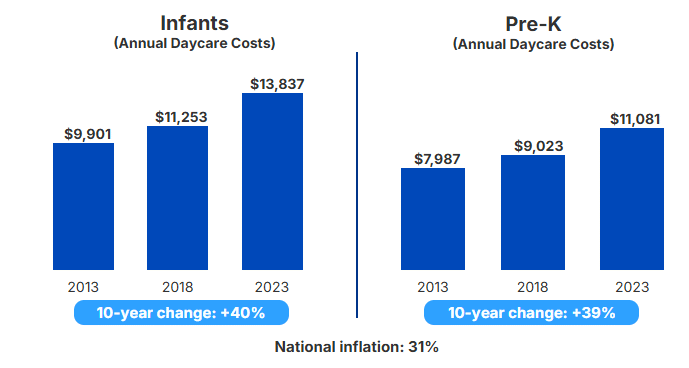
What stands out in this report is how deeply these shortages affect specific communities. Families across income levels struggle to find care, but lower-income families are far more likely to fall through the cracks entirely and be unable to find a program at all. Majority-Hispanic and Latino communities have the highest rates of child care deserts, and this analysis highlights particularly severe shortages in rural communities that have only become more limited in recent years. And those challenges are especially acute for families with infants and toddlers, for whom care is both hardest to find and most expensive.
The reality is that families are being asked to navigate an impossible situation. Parents are often returning to work just weeks after a baby is born because the United States still lacks universal paid leave, yet in many communities there are simply no infant care slots available. In some places, waitlists are so long that families join them and wait months or even years for an opening.
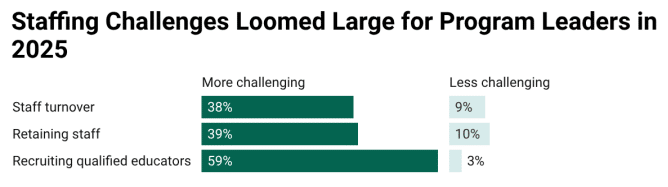
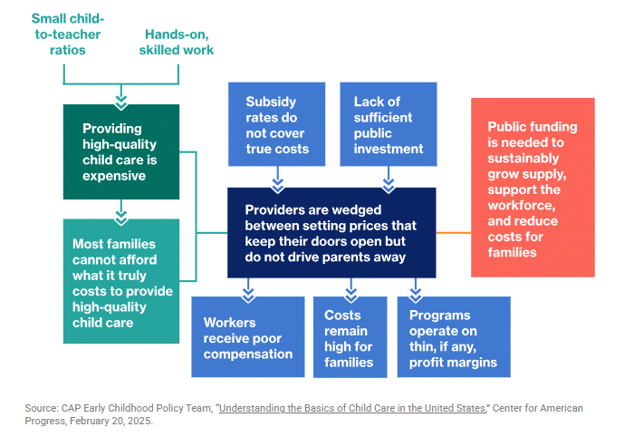
For many families, accessing high-quality child care that meets their needs is even more challenging than these estimates suggest. Communities across the country continue to face provider closures, workforce shortages, rising costs, and shrinking availability, leaving families with even fewer options for stable care. Many also encounter barriers finding care that meets their specific needs, including specialized services for children with disabilities, care during nontraditional work hours, or programs that reflect their language and cultural preferences.
We know that young children develop through repetition, predictability, and responsive relationships. High-quality child care settings give children daily opportunities to practice communication, follow routines, manage emotions, and learn expectations alongside trusted adults. Those experiences are foundational to healthy development, especially during the earliest years of life, when children’s brains are developing most rapidly.
We need to stop thinking about child care as just a workforce support and recognize it for what it truly is: a public good that is a critical developmental support for our youngest generation. Investments in an affordable, accessible, high-quality child care system with diverse options that meet families’ needs and preferences are investments in children’s long-term health, learning, relationships, and future success.