
What the report says:
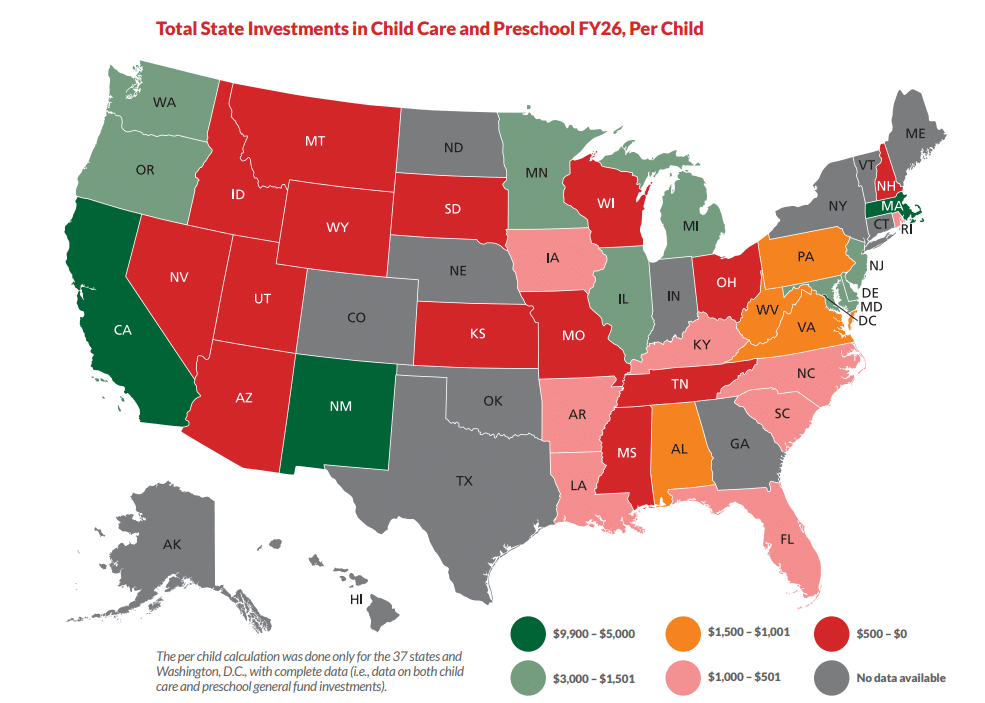
Child care and early learning funding across the U.S. is highly uneven and still not enough, with states investing anywhere from less than $500 to more than $5,000 per child, and some contributing nothing beyond minimum federal requirements.
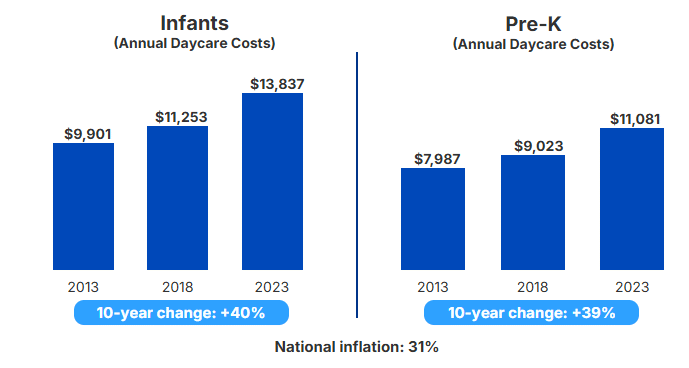
While some states have increased funding, the average is only about $1,700 per child, far below what is needed and still lower than K–12 spending levels. At the same time, families face average child care costs of over $13,000 per year, and the lack of affordable care costs the U.S. economy an estimated $172 billion annually.
Overall, the report shows a system under strain and calls for stronger, more coordinated public investment to better support children, families, and the workforce.
Katrina’s take:
The findings in this report (as well as recent analysis from First Focus on Children’s Babies in the Budget and Center for Early Learning Funding Equity’s Shortchanged Project) reinforce what families, providers, and communities have been experiencing for years: our early care and education system is not just underfunded, it is structurally imbalanced. When investment levels vary so widely by state, children’s access to quality care and learning depends more on geography than need, which is fundamentally inequitable.
At the same time, the fragmentation across our early care and learning systems makes these challenges even harder to address. Funding streams are spread across agencies, and connections to health, family supports, and other services are often limited. This not only complicates equitable service delivery, it also makes it difficult to collect and interpret clear data on funding and outcomes. Greater integration across systems, and stronger connections to comprehensive services, are essential to ensure all babies and families receive the quality experiences they deserve.
The United States is also out of step globally. Compared to peer nations, we invest far less in babies and young children, not only in early care and learning, but in the broader systems that support family well-being, including health and economic stability. This report makes clear that the consequences of that underinvestment show up everywhere: in high costs for families, low wages for educators, and limited access to quality care.
What is particularly striking is that even the highest levels of state investment in early childhood still fall below what most states spend on K–12 education. That gap sends a clear signal about our priorities, despite decades of research showing that the earliest years are the most critical for development and long-term outcomes.
As policymakers make decisions during federal and state budget cycles, this is a pivotal moment. Flat funding or cuts will only deepen the existing cracks in the system. Instead, we should be thinking about how to make sustained, strategic investments that lower costs for families, stabilize the workforce, and expand access to quality care.
Babies and young children cannot wait. If we are serious about strengthening our economy and supporting families, early care and education must be treated as essential infrastructure and funded accordingly.